Heading Home from Yorkshire
After our lovely week away up in Yorkshire, we began our slow journey back home via Norfolk, Suffolk and Kent, stopping at some of our favourite nature reserves. Essentially, we enjoyed a second week away, even though the weather wasn't quite so favourable.
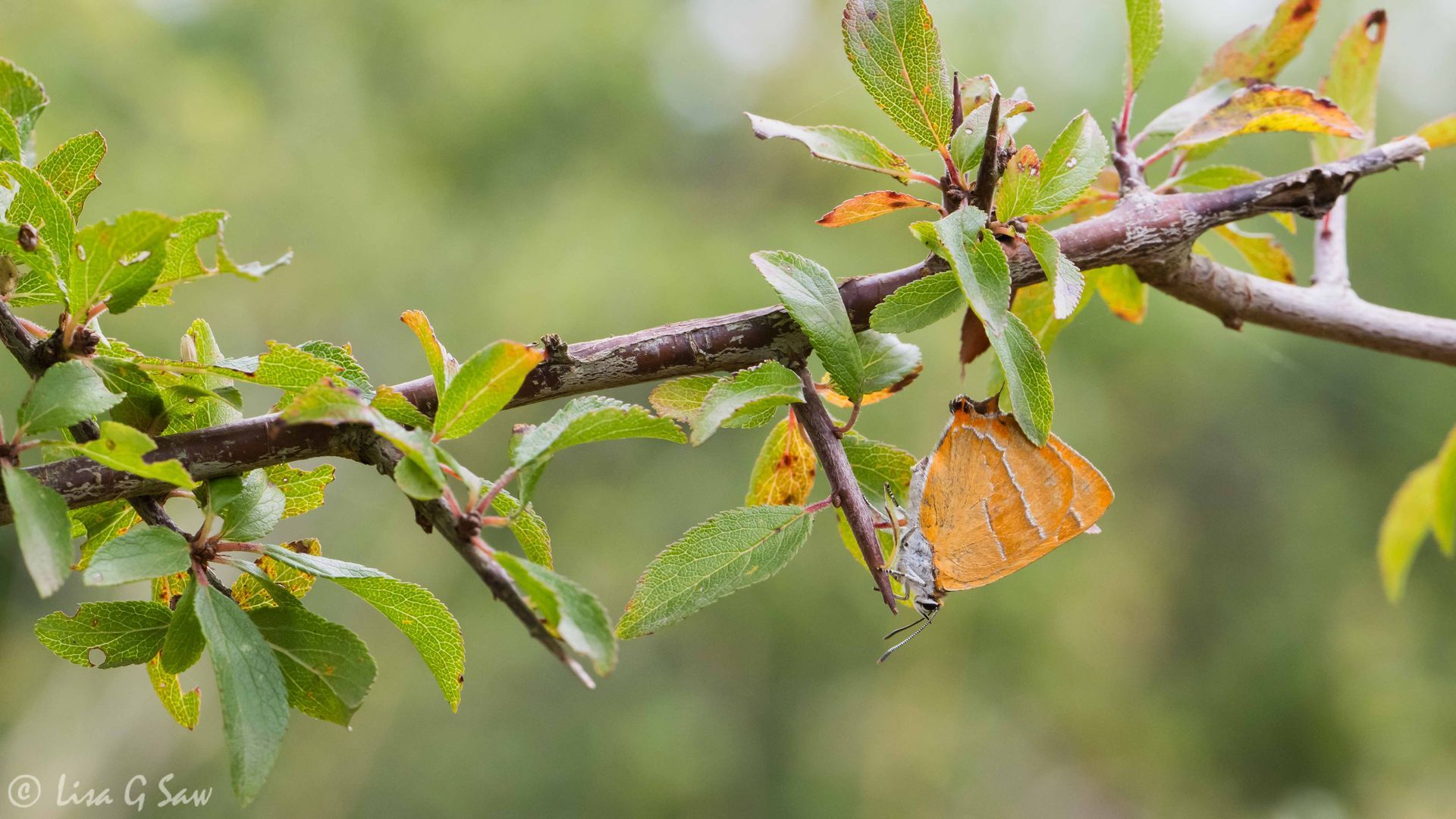
On the first day of our route south, we had a lovely couple of stops in Lincolnshire, to visit a friend of mine who'd fairly recently moved to the area, and also to visit Chamber's Farm Wood - a good site for Marsh Fritillaries that Bob had heard about. When we arrived, Bob commented that the little meadow nearby looked good for Black Hairstreak (lots of Blackthorn), and sure enough, he was right. He spotted one before I'd even joined him there. Soon we both spotted a handful flying around, which was lovely to see.
On our short walk through the woodland we saw our first White Admiral of the year. It was fleeting, but lovely. Not long after, we reached an open meadow and saw an abundance of Marsh Fritillaries flying around. I've never seen so many! They were well past their best, since it was late in their flight season, but they were still lovely to see. Eventually, we managed to find a fresher looking female who posed really nicely for us.
We stayed in Lowestoft for a few nights, which was perfectly situated for us to enjoy some time in both Norfolk and Suffolk. To start with, we ventured to Buxton Heath to look for Silver-studded Blue butterlies, where we'd seen them the previous year. It was wet and windy, which you might think was not the best day for looking for them, but it meant there were roosting and generally easier to photograph, when we found them. It was surprisingly easy and we found 42 in total, including six females, a handful of which looked as though they were newly emerged.
In the first photo, you can see the metallic silvery-blue centred spot near the wing fringe for which the species gets its name. The underside of the female is more brown in colour compared to the male, seen in the second photo, which has significantly more blue on the underside and a darker black margin of the wings compared to the similar Common Blue.
You can also see there is a significant difference in colour between the sexes on the upperside of the wings, with the female being more brown and blue for the male, which is common in the blue butterfly species. The thicker black margin of the male is another distinguishable feature when comparing the male to that of the Common Blue.
We also noticed quite a few Common Heath moths perched during the light rain, including both female and male. The female is the more fresh of the two, but you can also see how different the antennae are. The bigger more feathery looking antennae belong to the male, so that they can more easily pick up the pheromone scent of the females.
We did benefit from some dry spells that day, but of course the sunshine made the butterflies more active, so less easy to photograph.
From Buxton Heath we drove on to Strumpshaw Fen where I saw my first ever Swallowtail butterfly (last year). There was a short-lived moment of sunshine, which proved to be a blessing. As soon as we arrived, before we'd even left the car park to walk towards the visitor centre, we saw a Swallowtail flying nearby and land briefly on the Bramble to nectar. It flew off as quickly as it had appeared and wasn't seen again. Unfortunately, that was the only sighting of the day, not just for us, but at the site, due to the unfavourable conditions most of the day.
That wasn't the only surprise of the day. We bumped into a woman that Bob knew at the visitor centre, who was local in the area. She'd been on one of his butterfly tours in Sussex just three weeks before.
The following day we headed to Hickling Broad. This was one of my favourite nature reserves, notably because last year we not only had some fabulous sightings of Swallowtails, but earlier this year, we'd had amazing good fortune photographing the Bitterns too. We didn't see so many of the butterflies, but we managed to see two different individuals. The first one landed on the ground briefly, just in front of me, and was the much fresher of the two. It didn't hang around long though and soon flew quickly out of sight.
The second one, whilst not so pristine, stuck around a bit longer, so I was able to get a few photos and take a little video of it nectaring. I quite like the above photo, which has been photo-bombed by a bee!
Swallowtails are undoubtedly the most spectacular of our native butterflies, as they are considerably larger than the vast majority of UK species. I still enjoy seeing this magnificent beautiful butterfly.
Towards the end of the day we saw a large number of dragonflies in one concentrated area. They were starting to roost on the tall stems of the reeds and grasses. The Four-spotted Chasers were the most numerous of the species. There were also some with more dark smudges near the wing-tips, which is indicative of the praenubila form, and quite common to see.
Another praenubila form is seen below from the side view.
We didn't walk far around the nature reserve that day, so had limited views of the Norfolk Hawkers compared to last year. However, we did spot a male and female close together in the same area where all the other dragonflies seemed to be congregating. Judging by the diagnostic yellow triangle on S2 (at the top of the abdomen) I believe the male is on top, and the female is partially hidden below. There is a darker edge to the triangle in the female.
In terms of our visit to Suffolk, since the weather wasn't ideal, we ventured to RSPB Minsmere on the following two days. Primarily, this was so we could take refuge in the hides around the site if the rain was prolonged and/or heavy. The first of the two days was the worse, so I didn't take many photos. We sat in the Island Mere Hide for quite some time and were given some nice views of both Sedge and Reed Warblers. The Reed Warblers (below) came very close to the hide at times and were clearly nest building. They were lovely to see and kept me entertained for quite some time.
From the Bittern Hide, we had two different Bittern sightings, but only one that flew by us close enough to bother photographing it. You can see it was raining at the time and the light was very flat, but I love this view of its powerful beautifully patterned wings.
We were back in the same hide most of the second day too, and though there were several rain showers throughout the day, there were at least moments of sunshine. Thankfully, a Bittern decided to take flight past the hide when it was sunnier and I was able to take some more flying shots, something I've not really achieved before. You can see in the next photo that it is a male due to the pale blue colouration at the base of the bill, which is evident during the breeding season. The previous photo above would appear to be a female as it doesn't have this blue colouring.
On another one of the sunnier moments, I spotted this Drinker moth larva near the pond at the visitor centre. We were hoping to see Red-veined Darters there, but no luck unfortunately.
The amazing thing about the second day was just how many sightings we had of Hobby and how many different ones there seemed to be in the area too. It was wonderful to see and they seemed to pass by the Bittern Hide fairly frequently, come rain or shine.
You can see what a different a bit of sunshine makes to the clarity and colour of the image!
Hobbies catch any dragonflies they come across in flight, then eat them on the wing. In the first photo you can just about see a wing is in its beak and in both photos they're holding the rest of the dragonfly in one of its talons. I particularly like the second photo, the way the wings are outstretched and it's calling.
Despite some variable weather, we thoroughly enjoyed our time at Minsmere again. It's a reserve that doesn't disappoint. There's so much you can see at different times of year.
From there, on the second day, we drove straight to the Isle of Sheppey, where we were staying for our final two nights. This was primarily to give us access to Elmley Nature Reserve, which we've visited several times before. June is a wonderful time of year, because new life can be seen around the reserve. There were Moorhens with their chicks seen in the car park area, keeping their young close together. One adult was offering a dragonfly to a chick, which it struggled to swallow. It looked a bit helpless. In the end, the chick deposited it on the ground.
Other delights included seeing a handful of juvenile Common Redshanks along the 'safari' drive, a Goldfinch having a wash in a puddle and a Skylark having a mud bath.
However, the main attraction was watching an adult Oystercatcher with two chicks from the cover or our car. The adult uses its beak to prod at the ground and find worms. One of the youngsters would come in and eat whatever was being shared. But, when the rain came, they would take shelter under the warm protection of the adult.
Once the rain stopped, the adult shook off all the water it could, to dry off its feathers. You can just make out that there are some chicks still hiding underneath. What I noticed was, that when it was safe for them to come out, the adult made a noise - I saw the bill open a fraction. Then a few seconds later, out the chicks would come and they would continue to explore their surroundings, under the ever watchful eye of the parent.
We headed off to explore more of the nature reserve, but found ourselves watching them again later on. This time, we were lucky enough to have a better view of the chicks hiding under the adult. You can see their behinds!
However, on this occasion, when the rain stopped, she didn't call to them to come out. She just got up and walked away. One of the chicks lingered on the dirt patch a while longer and had a stretch of its tiny underdeveloped wings. If you look closely, you can see what I think are the little feather shafts that extend from the bones within the wings that will help it fly when it's mature.
Likewise, you can see a hint of the feather shafts in the right wing that is slightly extended out, in the next photo.
I love this little video of one of the chicks. It has a stretch of a leg, but loses its balance. Very quickly it recovers, instinctively using its wings to help, and regains its balance. It then continues to bob its head up and down, which they so often do. They really were a joy to watch.
There was just one more treat for us before we left, a gorgeous Brown Hare basking in the afternoon sunshine. Once again, we were quietly sitting in the car, whilst it sat on the opposite bank of the ditch. It was wonderful to watch it preening and then lay out, relaxed, but alert.
On our final day, we headed to East Blean Woods. I'd only been there once before in 2025, to see the Heath Fritillaries, which was part of my quest to see all our native species of butterfly. It was going to be another wet and dull day, which was a shame, but it didn't stop us from finding these little rare beauties. Funnily enough, the first one we found was in the exact area where we'd seen the first one last year! It looked lovely and fresh, with very few scratches or markings on it.
We actually found 23 of them in the end, all roosting, and sometimes close together.
Bob even spotted a mating pair. The difficulty was in finding any that were going to open up their wings to us - eventually one did! Lovely!
There were a few other lovely nature treats for us. There were some Variable Damselflies and a lovely Speckled Bush-cricket, which I've seen a few times before. But, the highlight for me that day, despite all the beautiful Heath Fritillaries, was finding a newly emerged Purple Hairstreak. I was thrilled, as I've wanted to see this for a few years now and they're not easy to spot. I just caught the glimpse of something underneath a leaf, as I ambled very slowly along the path. Thankfully, I actually bothered to check out what it was with my bins. It was the first record for Kent that year. Before, I'd never noticed how hairy this species is. It even looks like it has tiny grey hairs on its eyes.
Although it's not the sharpest photo, here you can see the meconium being deposited on the top side of a leaf, as it crawled along. It's much creamier than I've seen before. I've seen more of a clear meconium being excreted from a newly emerged Speckled Wood and a Red Admiral.
It didn't choose the best day to break out of its pupal case to start life as a butterfly!
What an end to an amazing two weeks exploring some of our lovely British nature reserves.
We may live on a relatively small island compared to other countries, but it certainly packs a punch when it comes to wildlife. Both large and small species can bring such joy if we make the effort to notice what's all around us. It's important to appreciate what we have, while we have it. If we learn about the wonders of nature, we will care more about it. Loss of habitats and the use of harmful pesticides are just two very good reasons why there is a great danger we'll lose many more species in the years to come - species that have chosen to make the UK their home.
I think one of the most important lessons of our generation is learning to live alongside nature, respecting it, valuing it, rather than seeing it as something that gets in the way of growth. We are a part of nature, not separate from it, nor better than it. It is my hope that we all learn this important lesson sooner rather than later.