May 26
WILDLIFE HIGHLIGHTS
May ended up being a quiet month for me in terms of wildlife sightings, because Bob managed to put his back out sadly, which curtailed our outings together. In fact, we had been due to go to Kent on the 1st May as an early Birthday trip for him, but we had to cancel that. To be honest, it was actually nice for me having a bit of downtime with Bob, though obviously I wasn't happy about the reason! Although Bob's back is taking a while to fully recover, he's gradually getting there and doing much better now.
Whilst there are only a few wildlife highlights to share with you for May, I've got to say, they were fabulous! I didn't have to travel far, as most were seen in our back garden in Seaford. It's amazing how much you can enjoy when you pay close attention to what's in your garden.
Literally, within a few days of Bob putting his back out, we heard that two Spotted Sandpipers (Actitis macularius) had been seen along the River Ouse north of Piddinghoe, not far from Seaford. It's an exceptionally rare vagrant that you'd normally expect to see in North America, or in Central and South America where it overwinters. It would certainly draw a lot of keen birders to the area, and for that reason I didn't even consider going to look for it myself over the bank holiday weekend, as I'm not really a birder per se. But, by the Monday, I was tempted and Bob encouraged me to go, despite the likelihood it could be busy. It was very disappointing for him, as there was no way he could manage it, which was such a shame.
So, having checked the latest sightings that day, I set off in the afternoon for Southease. I really hoped I would see them, but more than that, I prayed I'd have a really great close view of it on my own, which I knew was highly unlikely.
As I walked along the east side of the bank south towards their last known location, I saw a man approaching from the other direction. We briefly stopped to chat. He was clearly a birder and shared the good news that he'd seen it, which was very encouraging for me. I continued on further, and then another two men approached. Once again, we stopped to chat. When I set off again, I noticed that there was no one else on my side of the bank. What luck! However, on the other side of the bank there were two small clusters of people, a little distance apart. The sun was behind them, so their side would have been better for photos, which no doubt was why they had gone to the west side. I just hoped the bit of cloud cover we had, would be to my advantage, making it easier to photograph from the east.
The first group were pointing their bins or large camera lenses towards my side of the bank, so I knew where to look for the Spotted Sandpiper. I slowed down as I approached and it didn't take long for me to have my first glimpse of this attractive wader species through my bins. It's so striking. Just look at those lovely spots on its chest.
Realising it was walking away from me, I dipped down on the far side of the bank, out of view of the sandpiper, and walked a bit further ahead of it. Then coming back over onto the riverside, I found a good spot to nestle down low amongst some vegetation and waited for it to approach me. I was happily snapping away and even took some videos. I couldn't believe how close it came to me and that I had the place to myself. Amazing!
You can see it doesn't stand still for very long and how it bobs its tail up and down a lot, which is also something Common Sandpipers do. It was walking along the receding tideline, looking for whatever little creatures it could dig out of the mud to eat.
Once it had passed me, I repeated the process of walking ahead of it and crouching down again. Gradually, we drifted further away from the group of birders on the other side of the bank. I figured they must have had the other of the two in their view. But, since I had the really spotted one (apparently the other was not quite in full breeding plumage yet), I stayed with the one in my view.
A short while later, another guy approached me on the same side of the bank as me and I was pretty sure he was looking for the sandpiper too. I was standing up at this point, holding back for a moment, but still taking photos. When he was within a few metres of me, he asked what I was looking at. Evidently, he thought I was photographing some insect or something, as he was totally surprised when I mentioned the Spotted Sandpiper. Presumably, it was also because the other group of people were further up. He was thrilled and looked at it for a short while, but very kindly left me to it and he walked on further ahead. I was quite surprised, but pleasantly so, and went back to watching and photographing this attractive bird.
Eventually, the sandpiper flew to the other side of the bank, so I sat down and simply enjoyed watching it through my bins. I noticed there was less vegetation on that side of the bank and the bird appeared to be more jittery. Whenever people walked by it would either fly a few metres further along the bank, or it would run more quickly along the mud. It was quite amusing to watch. There were quite a few people who were oblivious to the sandpiper, just out enjoying the lovely afternoon. I was further amused when I noticed a man walking along carrying a big camera lens, clearly hoping to see the sandpiper. Despite the fact I was sitting on the opposite side of the bank to him, looking directly across, he didn't look down to the mud and walked straight past his quarry!
One of the small groups of people on the opposite bank did findally wander down towards the sandpiper, realising what I was photographing. I helped indicate where it was and hopefully they were able to get some nice photos too. That was when I realised I knew one of them and waved to him. Shortly after that, I left them to it. I'd had such a wonderful hour or so, and headed home very happy.
Sadly for Bob, he didn't get to enjoy the things he wanted to on his birthday, on the Friday afterwards. However, he did feel up to a walk along the river to try to see the Spotted Sandpiper himself. It would be a good test for him, to see how he would manage the walk. I carried his camera for him, and he just had his bins. Sadly though, despite a sighting by someone else that morning, the sandpipers seemingly had flown further south. Even though we walked further than I had done earlier in the week, we didn't see either of them.
The rest of the month was spent relaxing in the garden, when I wasn't working. Thankfully, it was fairly warm and sunny for us to do so. It helped keep Bob entertained whilst he was still recuperating. Bob's wildflower patch and plants seem to attract quite a few wild visitors to the garden, especially as we're close to the South Downs. One such notable creature was a Red Headed Cardinal Beetle.
We have many different species of butterfly in the garden, nectaring, egg-laying, passing through and very likely emerging too. We particularly enjoyed seeing this lovely female Common Blue. Usually it's the male of the species that is blue and females are more brown. But nowadays, we're seeing far more bluer ones like this one.
It was the birds that entertained us so much during May. We love watching their comings and goings, even when it isn't all good news. Spring is a time of new life beginning, but also life ending. The hungry chicks are being fed other creatures, insects mostly for the small birds, but small birds are food for larger birds. It's the cycle of life. Back in January, we'd already witnessed a Sparrowhawk plucking the feathers from a Dunnock on the fence on the day of our Big Garden Birdwatch. This time, a Sparrowhawk was seen following an unsuspecting Robin from the fat ball feeder to the fence, grabbing it in its talons and flying off with it. Bob and I were both startled with how quickly the Sparrowhawk swooped in. It had taken us, as well as the Robin, by surprise. But, we knew the Sparrowhawk no doubt had hungry mouths to feed. It was a good reminder for me not to get too attached to individual birds, or other animals. It was very sad, especially when we saw another Robin appear in the garden afterwards, looking around, but not feeding. Perhaps it was looking for its partner. Perhaps there were chicks waiting to be fed. Their chance of survival would be drastically reduced with only one adult feeding them. We would never know the outcome of that story, as is so often the case. It's just a part of life.
But, mostly, we had happy sightings. We had a pair of Blackbirds frequently visit. We'd throw out mealworms into the patch many mornings, and unwanted scraps of fruit and watch how they'd forage around trying to find them. I just love this next photo. It makes me smile. The male has found the bits of apple!
To our surprise, one morning the male brought its two fledglings to the garden! They seemed fairly relaxed with us being in the garden. One of the youngsters seemed quite content sitting on top of the (empty) Hedgehog house waiting to be fed. It was wonderful to be able to see the male feeding it.
It was so eager for food, opening its beak wide, so I could see how orange it was inside and that amazing little tongue. You can almost hear the words, "Feed me now!"
I think this next photo is of the other fledgling. It stayed perched up on the fence for a while. The male had tried to feed it something quite large, but it clearly wouldn't go down, so the youngster kept backing off. Eventually, the male realised and ate the food himself. When I slowly crept a bit closer to the fence, it opened its beak wide. I don't recall hearing a call in protest. I think it was possibly hoping for some food!
Later that same day, the Great Tit activity in the nest box was building. Bob had only put up it up a few months earlier this year. We were thrilled when a pair of Great Tits moved in very quickly. As the weeks passed by, the diligent pair were seen coming and going very frequently and we knew they were feeding their young. I just hoped I'd get to see them fledging.
In the afternoon light, the sun was shining on the nest box. I could just about hear the faint shrill squeaks coming from the chicks inside, calling out for food. Occasionally, one would appear at the hole, which was wonderful to see.
Sometimes, the chicks would poke their head right outside the box and Bob was sure they would fledge soon. The following morning at about 7.30am, I was down in the kitchen, and I could see more of this poking out, only it was more than just the head - part of the body was out and the feet were gripping the outside of the box. I watched from the backdoor with my bins. It didn't take long to realise fledging was imminent. I've never seen this before, firsthand. I was thrilled!
I raced upstairs with a cup of tea for Bob, then grabbed my camera and stood at the rear bedroom window and waited...
False alarm! Out the little one poked, only the adult male flew to the hole and the little one retreated inside once more. I was sure it was going to fly off any moment. I only had to wait about 20 minutes when I saw it fledge. It flew up into the Copper Beach overhanging our garden. Yay! I have no idea if any fledged before that, but I wouldn't be surprised if they had, as they often have a large number of fledglings. In the end, I saw five fledge from the nest box. What a thrill!
At one point, I saw one of the adult Great Tits fly into the nest box - I guess to check all the chicks have fledged. It's just as well it did, because there was still one inside. So often there''s one that's a little slower to leave. The adult kept calling to the youngster and doing a good job of enticing it out. It would fly to the hole with food, but not go inside. The chick poked it's head out, with its beak wide open, but the adult didn't let go of the food, and flew backwards, trying to encourage the chick to follow and fledge.
It took several attempts of coaxing it out, but eventually it did. Only, it didn't fly up into the tree like the others. It flew directly down towards the shrub right in front of the box. It hid close to the main branch. Having seen it go, I could just about make out where it was, but from indoors, it was tricky to get a good view. Even the parents couldn't see where it was. They kept returning to the garden, but perching in a spot that didn't give them a view of it. I guess the chick was silent now, because a shrill call would surely have given the adults a clue as to its whereabouts. Eventually, the male perched on the fence next to the nest box and it finally spotted the little one hiding. It returned with some food a few times I think, but eventually, the youngster had enough energy to fly off and join its siblings.
I can't tell you how special it is to witness this spectacle in our own back garden. Even now, reliving it is making me smile and feel happy. We've even seen them since returning to the fat ball feeder, which is lovely to see, assuming it's the same family, which is highly likely.
Towards the end of the month I had another little wildlife highlight. I was thrilled to see a Rose Chafer Beetle land on the Oxeye Daisies. I've not seen them many times before, and I don't have any good photographs. So, I was pleased to finally get some semi-decent ones. It's quite a striking broad beetle with its gorgeous metallic green outer layer. You can tell something of its size by comparing it to the flower head.
As if it weren't good enough to see one Rose Chafer Beetle, I was even more thrilled when another flew into the garden. They found each other and promptly began mating! The male is below the female. It's not the clearest photo, since there were lots of flower stems in the way, but in the first photo, you can clearly see the male sex appendage, which is called the aedeagus.
Then afterwards, they parted ways. One stayed where it was for a while and the other walked down the stem into the shade of the flowers and rested there for a while, and I left them alone.
Another wildlife highlight this month, was capturing a Hedgehog on our camera trap. We'd left it out since we'd seen some scat on the lawn, giving us a clue that we had another welcome visitor. Unfortunately, it was only seen less than on a dozen nights, so once again, our Hedgehog House is hogless! Maybe next year we'll get lucky and have one nest in there.
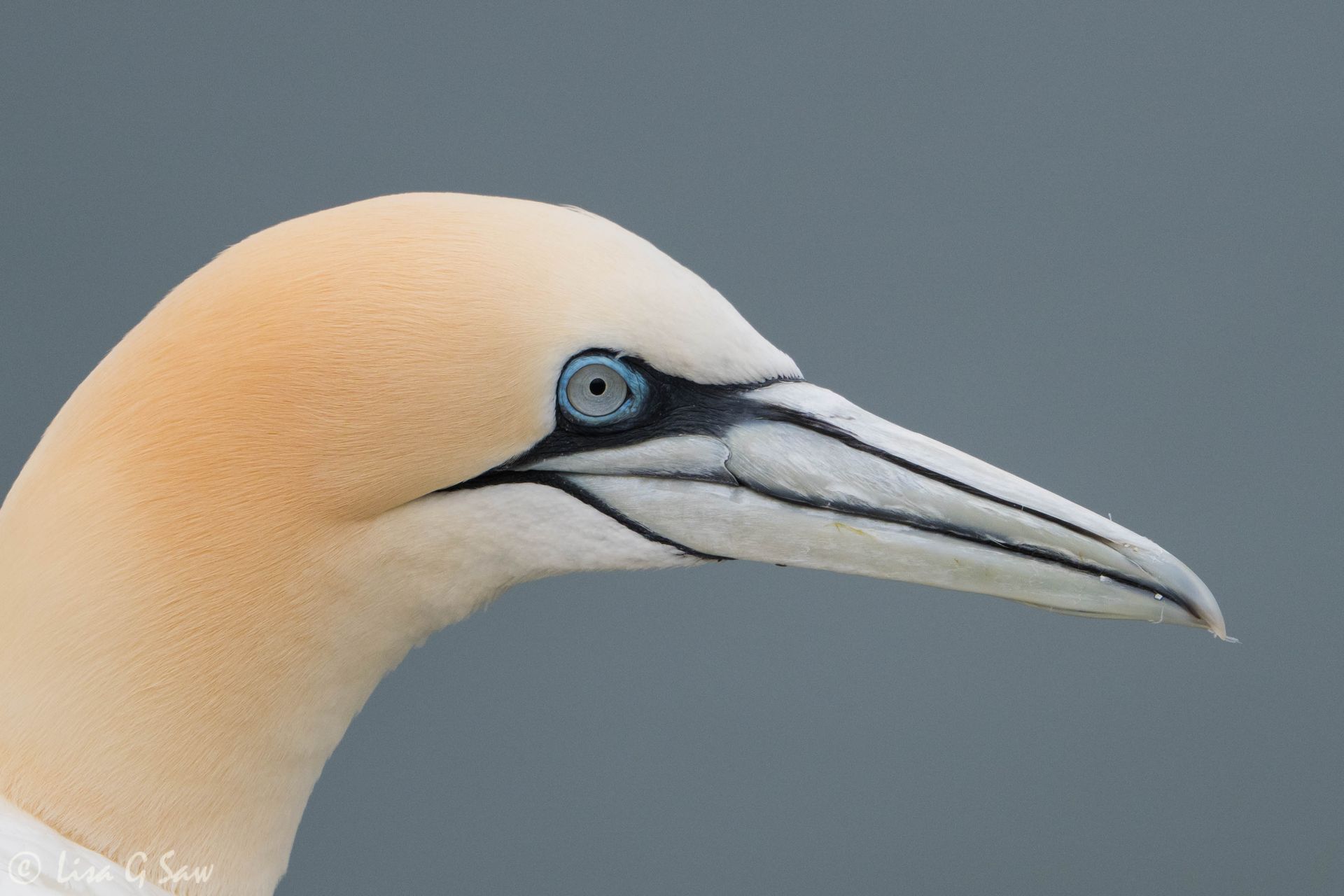
During May, Bob had been anxious about his back, because he had a Sussex Butterfly Tour for Naturetrek to lead mid to late May. Thankfully, his back improved enough for him to do it, but it was far from completely better. He was also unsure how he would be for our two-week break at the end of the month and into June. We were off to Bempton Cliffs to see the seabird colony, and the large number of Gannets there, and also appreciate the other wildlife in the area, plus a week heading south through Norfolk, Suffolk and Kent. The trip to Bempton was his birthday treat, so I was really hoping he would manage okay. You can read more about that trip soon...ish! But, needless to say, we saw a few Gannets!
All in all, May was a pretty memorable month for wonderful wildlife moments.