Lisa G Saw • August 19, 2026

Books and Courses 3

THE THIRD SET OF BOOKS AND COURSES THAT HAVE HELPED ME ON MY JOURNEY


Continuing where I left off in the last post in this blog series, Books and Course 2, here are more books and courses that have helped me along my healing journey. Hopefully, it will prove helpful to anyone else who is in need of some physical, emotional and/or spiritual healing. Many of the books included below were massively impactful for me and rank in my top 10 that have had the most influence.


You can see a list of all the books mentioned in these blog posts by clicking on the button below.

Reading List

The Answer - Conscious Questions

by Nick Haines, The Five Institute


After reading the two books Nick wrote (Books and Courses 1) and attending a couple of his online courses (Books and Courses 2), I had access to The Answer, which is all about Conscious Questions. It was a series of video tutorials explaining what they are, how to construct them and many examples of the kinds of questions it's possible to use, for a whole range of areas within life, such as relationships, health, finances, work and understanding yourself better.


He explains the power of a positively framed question to elicit a positive response, which can help lift you upwards. Of course, if you do the complete opposite it can very quickly lead to a downward spiral. When we ask ourselves a question that is consciously chosen, with care and kindness, we're communicating with the core of our being.


I've used them extensively over the last few years, and as I've become more practised with them, I find I use them virtually every day. But, most significantly, they helped me face the past, release suppressed emotions and see myself more clearly than I've ever done before. This is something I now share with others who are interested and on my Well-being Wanders.

The Answer - Conscious Questions by Nick Haines


After reading the two books Nick wrote (Books and Courses 1) and attending a couple of his online courses (Books and Courses 2), I had access to The Answer, which is all about Conscious Questions. It was a series of video tutorials explaining what they are, how to construct them and many examples of the kinds of questions it's possible to use, for a whole range of areas within life, such as relationships, health, finances, work and understanding yourself better.


He explains the power of a positively framed question to elicit a positive response, which can help lift you upwards. Of course, if you do the complete opposite it can very quickly lead to a downward spiral. When we ask ourselves a question that is consciously chosen, with care and kindness, we're communicating with the core of our being.

I've used them extensively over the last few years, and as I've become more practised with them, I find I use them virtually every day. But, most significantly, they helped me face the past, release suppressed emotions and see myself more clearly than I've ever done before. This is something I now share with others who are interested and on my Well-being Wanders.

Using Conscious Questions is simple and effective and it has allowed me to make real and lasting changes in my life - how I see myself, others and the world.


The Celestine Prophecy Series of Books

by James Redfield (1993, 1996,1997, 1999)


I first read this novel, The Celestine Prophecy, decades ago in my mid-twenties. It made an impact back then, but even more so now I've read it again, now in my fifties, not least because of where I am in my life at this point, facing lots of challenges and trying to understand myself better. This time around, I went on to read the other books in the series, including The Tenth Insight, and The Secret of Shambhala.


As it states on the back cover of the first book, 'The story it tells is a gripping one of adventure and discovery, but it is also a guidebook that has the power to crystalise your perceptions of why you are where you are in life...and to direct your steps with a new energy and optimism as you head into tomorrow.' The book is written in the first-person and is about spiritual awakening, exploring some of the ideas and beliefs from ancient Eastern traditions and New Age Spirituality. The story focuses on the discovery and understanding of nine spiritual insights from an ancient manuscript in Peru, such as meaningful coincidences, how energy is all around us and within us, how it can be drained or increased when around other people, and how we can replenish it.

The Celestine Prophecy Series of Books

by James Redfield (1993, 1996, 1997, 1999)


I first read this novel, The Celestine Prophecy, decades ago in my mid-twenties. It made an impact back then, but even more so now I've read it again, now in my fifties, not least because of where I am in my life at this point, facing lots of challenges and trying to understand myself better. This time around, I went on to read the other books in the series, including The Tenth Insight, and The Secret of Shambhala.


As it states on the back cover of the first book, 'The story it tells is a gripping one of adventure and discovery, but it is also a guidebook that has the power to crystalise your perceptions of why you are where you are in life...and to direct your steps with a new energy and optimism as you head into tomorrow.' The book is written in the first-person and is about spiritual awakening, exploring some of the ideas and beliefs from ancient Eastern traditions and New Age Spirituality. The story focuses on the discovery and understanding of nine spiritual insights from an ancient manuscript in Peru, such as meaningful coincidences, how energy is all around us and within us, how it can be drained or increased when around other people, and how we can replenish it.


"We're beginning to understand that the health of the body is determined to a great degree by our mental processes: what we think of life and especially of ourselves, at both the conscious and the unconscious levels."

"We're beginning to understand that the health of the body is determined to a great degree by our mental processes: what we think of life and especially of ourselves, at both the conscious and the unconscious levels."

"Fear can create blocks in the body's energy flow, which ultimately leads to problems. Fears keep manifesting in ever-greater degrees until we deal with them. Physical problems are the last step. Ideally we should deal with the blocks early, in a preventative way, before illness develops."


What I love about the first book in this series, is the new way of seeing the world, that at the time was very different. But since it was written in 1993 and we have learned so much more about what the mind and the body is capable of, it makes me realise how ahead of his time the author was. I have first hand experience that allows me to see how true the insights are and reading this book was inspiring and uplifting. It's this final quote that helps me stay positive when all around me sometimes feels very negative:


"The ultimate choice: to fear human culture is falling apart or we can hold the vision that we are awakening, a greater awareness of who we are and why we're here, one of love. What is it that you wish to put out into the world? What is the vision of the future you would like to see?"


The next book is another uplifting book, but in a different vein, although with similar themes. The more I read, the more I see the crossovers and similarities of what writers are saying, but from a slightly different perspective.

"Even when we're lost in the dark, each of us can choose how to forge the path ahead. Seen this way, choice is empowering. It lifts us up; it doesn't drag us down."

The Well-lived Life by Dr Gladys McGarey (2023)


Dr Gladys, as she was often referred to, sounds like she was a remarkable woman. She was widely known as the mother of holistic medicine and she was still a practising doctor at the age of 103 (she died soon after this book was published). Aside from being a holistic doctor and medical activist, she co-founded the American Holistic Medical Association in 1978.


In this book, "she explains how to live a long life filled with vitality, purpose and joy." Her book makes for a lovely uplifting and inspiring read, as she shares her six secrets for a well-lived life:

  1. You are here for a reason - what is it that makes you most happy?
  2. All life needs to move - if we get stuck we need to look to get moving again - do what you can to let go so you can move forward.
  3. Love is the most powerful medicine - will you choose to direct your attention towards love or toward fear?
  4. You are never truly alone - at a fundamental level we are all connected.
  5. Everything is your teacher - we live our best lives when we approach life with curiosity and a desire to learn from everything.
  6. Spend your energy wildly - invest your energy in what matters to us, but that includes rest.

The Well-lived Life

by Dr Gladys McGarey (2023)


Dr Gladys, as she was often referred to, sounds like she was a remarkable woman. She was widely known as the mother of holistic medicine and she was still a practising doctor at the age of 103 (she died soon after this book was published). Aside from being a holistic doctor and medical activist, she co-founded the American Holistic Medical Association in 1978.


In this book, "she explains how to live a long life filled with vitality, purpose and joy." Her book makes for a lovely uplifting and inspiring read, as she shares her six secrets for a well-lived life:

  1. You are here for a reason - what is it that makes you most happy?
  2. All life needs to move - if we get stuck we need to look to get moving again - do what you can to let go so you can move forward.
  3. Love is the most powerful medicine - will you choose to direct your attention towards love or toward fear?
  4. You are never truly alone - at a fundamental level we are all connected.
  5. Everything is your teacher - we live our best lives when we approach life with curiosity and a desire to learn from everything.
  6. Spend your energy wildly - invest your energy in what matters to us, but that includes rest.

I've often come across the words conscious, subconscious and unconscious and wondered what the difference is between each. I think her explanation is the closest to what feels true:

"The conscious mind contains what we're aware of in any given moment. The subconscious expands the conscious to include that which we can think of, imagine or remember just by giving it attention. But, the unconscious includes everything else: the things we assume, believe, or have forgotten we experienced. It includes the automatic reactions we can't quite explain."


I like this inspiring quote from her book too:


"We reach a certain age in life when we think we've stopped growing, healing is impossible, or that we'll never change. But, we're never done growing, healing is never impossible, and it's always a good time to make a change."


Energy Medicine by Jill Blakeway (2019)


"For thousands of years, practitioners of Traditional Chinese Medicine have used the body's own energy - which they call 'qi' - to promote healing." In this book, Blakeway tells the story of how she discovered energy medicine and overcame her initial disbelief to become one of its leading practitioners. From hard science to the spiritual and back, Energy Medicine is a quest to find out why these alternative methods of healing are proving successful for thousands worldwide."


I found this book enlightening and amazing in places, with some lovely quotes that resonated deeply. Sometimes you read something and you just know - you feel - the words are true, which is why I wanted to share this book with you.


"Force doesn't move dense energy in the body, gentleness and love do."


I'm reminded how we don't have to see something to know it exists and there are some things we don't fully understand yet. But, gradually we are opening and expanding our minds with all that we are learning.

Energy Medicine

by Jill Blakeway (2019)


"For thousands of years, practitioners of Traditional Chinese Medicine have used the body's own energy - which they call 'qi' - to promote healing." In this book, Blakeway tells the story of how she discovered energy medicine and overcame her initial disbelief to become one of its leading practitioners. From hard science to the spiritual and back, Energy Medicine is a quest to find out why these alternative methods of healing are proving successful for thousands worldwide."


I found this book enlightening and amazing in places, with some lovely quotes that resonated deeply. Sometimes you read something and you just know - you feel - the words are true, which is why I wanted to share this book with you.


"Force doesn't move dense energy in the body, gentleness and love do."


I'm reminded how we don't have to see something to know it exists and there are some things we don't fully understand yet. But, gradually we are opening and expanding our minds with all that we are learning.

Some of the key take homes were:

  • Energy is inside us and around us everywhere, which can be used in healing
  • She explains the physiological changes and benefits of acupuncture, including the improvement of sleep
  • How the placebo effect works and can be effective
  • What resonance is and how one person can affect the energy of another
  • The role of the seven chakras in keeping a person in balance and what each one represents
  • How electrical energy travels through the fascia in our body, which is found everywhere - something I first came to appreciate when I saw Caroline Kremer a few years before reading this book, a specialist in the Bowen Technique, mentioned in my blog Holistic View of Health


"Fear is the energy which contracts, closes down, draws in, hides, hoards, harms."


"Love is the energy which expands, opens up, sends out, reveals, shares, heals."


Conversations With God I, II, III and IV (Awaken The Species)

by Neale Donald Walsch (1995, 1997, 1998, 2017)


When it comes to religion and the question of whether there is a God, for a long time I sat on the fence. In my twenties and early thirties I felt more spiritual, especially around the time my dad died. But, time and experience gradually eroded away this belief and after reading Richard Dawkins book, The God Delusion, I finally came off the fence on the side of the non-believer - as agnostic - in the absence of proof I didn't believe there was a God. Perhaps it's a necessary step in some people's lives to experience both sides of the same coin, for greater understanding. To know love, we must know hate.


As I've continued along my healing journey in these recent years, learning from my past and realising there have been lessons to learn from it all, and many things to let go of, the question of faith and if there really is a God has come back up for me. The Soul Must Go On was the book that started my spiritual healing. With far greater curiosity nowadays and an openness and willingness to explore, I continued to read books that could challenge my current thinking. I'd heard of the Conversations with God trilogy before a few times (the fourth book came many years later). Hearing about it one more time more recently was the prompt I needed to finally read the set. It felt like the right time.

Conversations With God I, II, III and IV (Awaken The Species)

by Neale Donald Walsch (1995, 1997, 1998, 2017)


When it comes to religion and the question of whether there is a God, for a long time I sat on the fence. In my twenties and early thirties I felt more spiritual, especially around the time my dad died. But, time and experience gradually eroded away this belief and after reading Richard Dawkins book, The God Delusion, I finally came off the fence on the side of the non-believer - as agnostic - in the absence of proof I didn't believe there was a God. Perhaps it's a necessary step in some people's lives to experience both sides of the same coin, for greater understanding. To know love, we must know hate.


As I've continued along my healing journey in these recent years, learning from my past and realising there have been lessons to learn from it all, and many things to let go of, the question of faith and if there really is a God has come back up for me. The Soul Must Go On was the book that started my spiritual healing. With far greater curiosity nowadays and an openness and willingness to explore, I continued to read books that could challenge my current thinking. I'd heard of the Conversations with God trilogy before a few times (the fourth book came many years later). Hearing about it one more time more recently was the prompt I needed to finally read the set. It felt like the right time.

"I have given you a free will - the power to do as you choose - and I will never take that away from you, ever."


To explain these books best, I've shared the back cover blurb: " Suppose you could ask God the most puzzling questions about existence - questions about love and faith, life and death, good and evil. Suppose God provided clear, understandable answers. It happened to Neale Donald Walsch. It can happen to you. You are about to have a conversation...


"Walsch was experiencing a low point in his life when he decided to write a letter to God, venting his frustrations. What he did not expect was a response. As he finished his letter, he was moved to continue writing - and out came these extraordinary answers to his questions. They will amaze you with complex paradoxes that make perfect sense, profound logic, and astounding truths. Here are answers that bring together as one the deeper meaning of all beliefs and traditions. Here are answers that will change you, your life, and the way you view other beings. For those with an open mind, a limitless curiosity, and a sincere desire to seek the truth, this book is stunning."


I can now attest to the truth of those words!


"Everything you think, say and do creates your reality. The soul is running things."


"Mine is always your Highest Thought (joy), your Clearest Word (truth), your Grandest Feeling (love). Anything less is from another source."


This next quote is so true!


"My most powerful message is experience. The result of your not listening to your experience is that you keep re-living it, over and over again...you will get the message sooner or later."


In essence, what I've been experiencing over the last few years, which I'm now sharing in this blog post series, is how I came to realise I was re-living an experience over and over. I started to see from a new perspective why it was happening - what my thoughts, words and actions were that led to this repeated pattern. I was finally able to see what I couldn't see before. I finally got the message!

The 'conversations' are so thought provoking and at times downright challenging, and yet I feel it's been totally worthwhile and beneficial. From happiness, to money, to faith, the series moves from a look at ourselves as individuals, to global geopolitics, metaphysical life on the planet, universal truths of the highest order and the future of our planet and how we can set about a new 'infinitely better path.' It's just your average Sunday afternoon read really!!!


When I began reading the first book, I struggled to use the word 'God', and had issues with the church establishment on more than one level, which historically has been run by powerful men that might have had their own agenda. However, the more I read, I realised I didn't have to believe in the church or 'God' in the way I'd been brought up. For me, it's more about believing in the universal mysterious life force that exists all around us and within us, and how love is the answer to so many things. You don't have to be religious to know that kindness, compassion and love are the cornerstones of a happy life.


My understanding of these books didn't come from an intellectual place, but from a place of emotional resonance. I could feel the truth of the words as I absorbed their meaning, which was far more powerful. The response came from deep within the core of my body. This is the best way I can explain the remarkable transformation that has occurred within me. This is what spirituality feels like to me.


I've let go of my old beliefs and made way for the new - a personal relationship with God knowing that I am unconditionally loved, and love the same way. It amazes me that now I can even use the words 'God' and 'pray' so easily. I understand now this idea of awakening.

The 'conversations' are so thought provoking and at times downright challenging, and yet I feel it's been totally worthwhile and beneficial. From happiness, to money, to faith, the series moves from a look at ourselves as individuals, to global geopolitics, metaphysical life on the planet, universal truths of the highest order and the future of our planet and how we can set about a new 'infinitely better path.' It's just your average Sunday afternoon read really!!!


When I began reading the first book, I struggled to use the word 'God', and had issues with the church establishment on more than one level, which historically has been run by powerful men that might have had their own agenda. However, the more I read, I realised I didn't have to believe in the church or 'God' in the way I'd been brought up. For me, it's more about believing in the universal mysterious life force that exists all around us and within us, and how love is the answer to so many things. You don't have to be religious to know that kindness, compassion and love are the cornerstones of a happy life.


My understanding of these books didn't come from an intellectual place, but from a place of emotional resonance. I could feel the truth of the words as I absorbed their meaning, which was far more powerful. The response came from deep within the core of my body. This is the best way I can explain the remarkable transformation that has occurred within me. This is what spirituality feels like to me.

I've let go of my old beliefs and made way for the new - a personal relationship with God knowing that I am unconditionally loved, and love the same way. Now, it amazes me that I can even use the words 'God' and 'pray' so easily. Finally, I understand this idea of awakening.

Here are some more quotes that I like:


"Emotion is the power which attracts. Emotion is energy in motion."


"The First Law is that you can be, do and have whatever you can imagine. The Second Law is that you attract what you fear."


"Healing is the process of accepting all, then choosing best."


It Didn't Start With You by Mark Wolyann (2022)


This book was recommended to me by a good friend. I was fascinated by the idea of inherited trauma, so dived into the book with open curiosity, but not because I thought it would help me specifically. However, what I discovered was revelatory! Mark Wolyann's insights directly impacted me, when I was able to see my own experience in life from a new perspective. It was another significant step on my emotional healing journey.


The book is split into three sections. 1. The Web of Family Trauma - describes the knowledge gained in recent years that explains how it's even possible for trauma to be inherited. He explains how the chromosomes and DNA make up less than 2% of our total DNA - this is what determines our physical traits and is unchanged. The other 98% is called noncoding DNA and its responsible for many of the emotional, behavioural, and personality traits we inherit, which can be changed because they're known to be affected by environmental stresses such as toxins, inadequate nutrition, as well as stressful emotions. He explains how a specific gene can be activated or silenced, so inheriting a gene might predispose you to something but it's only likely to be 'activated' by our experience in life, which goes some way to explain for instance, why an inherited illness doesn't show up at birth but later in someone's life.


2. The Core Language Map - allows the reader to gain a deeper personal insight, by exploring the repeated patterns of behaviour and experiences, so you're able to identify your own core complaint, descriptors, sentence and trauma. The words we use say more than we realise. Emotionally charged words and sentences can lead us back to unresolved trauma. 3. Pathways to Reconnection - addresses the next steps on how to move forward and shift that fear with exercises I found to be helpful.

It Didn't Start With You by Mark Wolyann (2022)


This book was recommended to me by a good friend. I was fascinated by the idea of inherited trauma, so dived into the book with open curiosity, but not because I thought it would help me specifically. However, what I discovered was revelatory! Mark Wolyann's insights directly impacted me, when I was able to see my own experience in life from a new perspective. It was another significant step on my emotional healing journey.


The book is split into three sections. 1. The Web of Family Trauma - describes the knowledge gained in recent years that explains how it's even possible for trauma to be inherited. He explains how the chromosomes and DNA make up less than 2% of our total DNA - this is what determines our physical traits and is unchanged. The other 98% is called noncoding DNA and its responsible for many of the emotional, behavioural, and personality traits we inherit, which can be changed because they're known to be affected by environmental stresses such as toxins, inadequate nutrition, as well as stressful emotions. He explains how a specific gene can be activated or silenced, so inheriting a gene might predispose you to something but it's only likely to be 'activated' by our experience in life, which goes some way to explain for instance, why an inherited illness doesn't show up at birth but later in someone's life.

2. The Core Language Map - allows the reader to gain a deeper personal insight, by exploring the repeated patterns of behaviour and experiences, so you're able to identify your own core complaint, descriptors, sentence and trauma. The words we use say more than we realise. Emotionally charged words and sentences can lead us back to unresolved trauma.


3. Pathways to Reconnection - addresses the next steps on how to move forward and shift that fear with exercises I found to be helpful.

""The great teachers understand that where we come from affects where we go, and that what sits unresolved in our past influences our present."


"Both Jung and Freud noted that whatever is too difficult to process does not fade away on its own, but, rather, is stored in our unconscious."

"Researchers are now finding that our thoughts, inner images and daily practices, such as visualisation and meditation, can change the way our genes express." He states that images can be extremely powerful because our minds have a vast capacity for healing. Imagining a scene of forgiveness, comfort, or a loved one, can profoundly settle into our bodies and sink into our minds. I can attest to the truth of those words, not only because I tried one of his visualisation exercises, which helped me hugely, but also as someone who practices meditation regularly and has noticed significant long term changes in my emotional state and behavioural patterns as a result.


In It Didn't Start With You there were a few books that were recommended that appealed to me, like signs of what I might benefit from reading. This is what made me turn to author Norman Doidge next. He wrote two books, and unsure which I might find more interesting, I bought them both and read them back to back. Both were fascinating.

The Brain That Changes Itself and The Brain's Way of Healing by Norman Doidge (2007, 2015)


In The Brain That Changes Itself, which I read first, he explains all about the relative new area of science, neuroplasticity. Along with stories of personal triumph that highlight the amazing adaptability of the brain, he draws attention to the key people that over the decades have contributed to our growing knowledge and understanding about the brain.


Myths are dispelled, such as

  • the belief our brain gradually begins a long process of decline after our 20s/30s
  • the belief that if brain cells failed to develop properly, or were injured, or died, they could not be replaced
  • the belief the brain could not alter its structure and find a new way to function if part of it was damaged
  • the belief if the brain couldn't change, it seemed that human nature (stemming from it) was fixed and unalterable as well


The research has shown we are developing new neural pathways up to the day we die. Essentially, it is never too late to change!

The Brain That Changes Itself and The Brain's Way of Healing

by Norman Doidge (2007, 2015)


In The Brain That Changes Itself, which I read first, he explains all about the relative new area of science, neuroplasticity. Along with stories of personal triumph that highlight the amazing adaptability of the brain, he draws attention to the key people that over the decades have contributed to our growing knowledge and understanding about the brain.


Myths are dispelled, such as

  • the belief our brain gradually begins a long process of decline after our 20s/30s
  • the belief that if  brain cells failed to develop properly, or were injured, or died, they could not be replaced
  • the belief the brain could not alter its structure and find a new way to function if part of it was damaged
  • the belief if the brain couldn't change, it seemed that human nature (stemming from it) was fixed and unalterable as well


The research has shown we are developing new neural pathways up to the day we die. Essentially, it is never too late to change!

"Thinking, learning, and acting can turn our genes on or off, thus shaping our brain anatomy and our behaviour."


So much of it is explained by sharing case studies of real people and their experiences from brain injury, trauma, stroke and developmental disturbances in childhood that have led to impairment. It's explained well for the non-scientist to follow and even if the details were occasionally more than I needed or tricky to grasp, the fundamental meaning was always clear. Our brains really are remarkable!


One of the world's leading researchers on brain plasticity is Michael Merzenich. I read with particular interest his pioneering work, because it lead to greater understanding about brain development issues relative to ADHD, autism and others issues. Working with a team of other researchers they have created a set of computer activities that are designed to help children with their brain development (Fast Forword). They also found there were significant benefits for adults too, doing exercises that helped people to improve their memory, attention, brain speed, intelligence, navigation and people skills, and created BrainHQ. Realising that I had a few development issues in some of these key areas, I decided to give it a try. I've been using them for over a year and I've noticed significant improvements in all areas.

The key to these exercises is about always pushing yourself further to do harder levels, but just enough that you can still achieve them and improve. Feeling good, being rewarded and seeing improvements is crucial for motivation. What became apparent is that I'm far better with numbers than words and visual learning rather than auditory learning. Of course, what I realise now, based on the principle of 'use it or lose it', whilst it was good to do exercises I'm good at already and challenge myself further, the ones that were my weaknesses were where I needed to pay more attention to, or things would only get worse in time. Memory is a key thing for me, and probably a concern for most of the older population. So, when I read that the quality of the output is only as good as the input, it really resonated with me. I realised my auditory memory is not as good as my visual memory. This was due in part to not listening fully and attentively. A valuable lesson to learn and I thought worth sharing.


The second book was equally illuminating, because it addressed issues that many of the adult population will have experienced first or secondhand, or may even fear it will happen to them in the future: pain, Parkinson's Disease, Stroke, Dementia and Alzheimer's Disease. Once again, he shared stories of people doing amazing things in terms of coping and/or overcoming their specific challenges in non conventional ways. Reading this book was the first time I came across the Tomatis Method - helping opera singers who were losing their hearing and unable to reach the high notes they could before. Plus, I also discovered the Feldenkrais Method, which enables people to find new ways to move their bodies when affected by pain or dysfunction.


Tinnitus was mentioned throughout the book, something I'd been experiencing since the peri-menopause, along with high frequency hearing loss. I didn't think there was anything that could be 'done' about the tinnitus, so I'd not really thought much about it. After reading this book, which had opened my mind to so many amazing possibilities, I decided I would explore the Tomatis Method further.

The key to these exercises is about always pushing yourself further to do harder levels, but just enough that you can still achieve them and improve. Feeling good, being rewarded and seeing improvements is crucial for motivation. What became apparent is that I'm far better with numbers than words and visual learning rather than auditory learning. Of course, what I realise now, based on the principle of 'use it or lose it', whilst it was good to do exercises I'm good at already and challenge myself further, the ones that were my weaknesses were where I needed to pay more attention to, or things would only get worse in time. Memory is a key thing for me, and probably a concern for most of the older population. So, when I read that the quality of the output is only as good as the input, it really resonated with me. I realised my auditory memory is not as good as my visual memory. This was due in part to not listening fully and attentively. A valuable lesson to learn and I thought worth sharing.


The second book was equally illuminating, because it addressed issues that many of the adult population will have experienced first or secondhand, or may even fear it will happen to them in the future such as: pain, Parkinson's Disease, Stroke, Dementia and Alzheimer's Disease. Once again, he shared stories of people doing amazing things in terms of coping and/or overcoming their specific challenges in non conventional ways.

Reading this book was the first time I came across the Tomatis Method - helping opera singers who were losing their hearing and unable to reach the high notes they could before. Plus, I also discovered the Feldenkrais Method, which enables people to find new ways to move their bodies when affected by pain or dysfunction.


Tinnitus was mentioned throughout the book, something I'd been experiencing since the peri-menopause, along with high frequency hearing loss. I didn't think there was anything that could be 'done' about the tinnitus, so I'd not really thought much about it. After reading this book, which had opened my mind to so many amazing possibilities, I decided I would explore the Tomatis Method further.

Listening For Wellness - An Introduction to th eTomatis Method by Pierre Sollier (2005)


I first came across Dr Tomatis' work in the Norman Doidge book The Brain's Way of Healing. I was fascinated to discover how his work was able to help opera singers that had literally sung themselves to deafness - they could only sing the notes that they could hear. But, change was possible. With the help of Tomatis, once their hearing was restored or improved they could sing again.


From the back of the book, it reads, "Dr Tomatis, a French ear, nose and throat specialist, is one of the twentieth century pioneers in the field of sound and music therapy. The work of Tomatis brings new insights about the role of the ear in human development. Tomatis argues that poor listening originates many educational and psychological problems. By training the ear to listen better, it is possible to improve or restore normal functioning. Tomatis' discoveries are applied successfully in the field of autism, dyslexia, attention deficit disorder, behaviour problems, motor- and speech difficulties. They facilitate learning, foreign languages, improve the singing voice, sharpen communication skills, boost creativity and maximise learning."

Listening For Wellness - An Introduction to the Tomatis Method

by Pierre Sollier (2005)


I first came across Dr Tomatis' work in the Norman Doidge book The Brain's Way of Healing. I was fascinated to discover how his work was able to help opera singers that had literally sung themselves to deafness - they could only sing the notes that they could hear. But, change was possible. With the help of Tomatis, once their hearing was restored or improved they could sing again.


From the back of the book, it reads, "Dr Tomatis, a French ear, nose and throat specialist, is one of the twentieth century pioneers in the field of sound and music therapy. The work of Tomatis brings new insights about the role of the ear in human development. Tomatis argues that poor listening originates many educational and psychological problems. By training the ear to listen better, it is possible to improve or restore normal functioning. Tomatis' discoveries are applied successfully in the field of autism, dyslexia, attention deficit disorder, behaviour problems, motor- and speech difficulties. They facilitate learning, foreign languages, improve the singing voice, sharpen communication skills, boost creativity and maximise learning."


By the time I read this book, I'd already had a standard hearing test that revealed I had mild to moderate hearing loss. I recall being told that it wouldn't improve. Having read The Brain's Way of Healing, my immediate reaction was, 'I'm not so sure about that!' I was eager to learn more about the Tomatis Method, as I felt sure it could help me.

By the time I read this book, I'd already had a standard hearing test that revealed I had mild to moderate hearing loss. I recall being told that it wouldn't improve. Having read The Brain's Way of Healing, my immediate reaction was, 'I'm not so sure about that!' I was eager to learn more about the Tomatis Method, as I felt sure it could help me.

There were various facts stated in the book which Tomatis had discovered that really resonated with me:


  • our posture affects how well we listen - upright is best
  • we all have a dominant ear for listening - right ear is best - quickest for processing
  • when a person is left ear dominant they can be slower to process information as it has further to travel - from the left ear, to the right side of the brain and across into the left side of the brain where the sound is processed - information can be lost along the way and high frequency loss is often the start of hearing issues
  • you can train yourself to be more right ear dominant
  • stress can affect which ear you listen with - we use the left ear when we are responding from our more emotional right side of the brain
  • hearing issues at particular frequencies can indicate an issue or trauma in the body - higher frequencies relate to the upper parts of the body and lower frequencies relate to lower down
  • Tomatis developed a listening test rather than a hearing test which checks how well we hear through our ears (air conduction) - relating to how we listen to others - and vibration (bone conduction) - relating to how we listen to ourselves


On the back end of reading this book, I went online to see the available practioners in the UK and ended up reaching out to The Sound TeacherFor nearly a year, I've been using the Tomatis Method to help address my hearing loss/tinnitus issues. I've been amazed not only by what I've learned along the way about myself and the ways I've been holding on to stress in my body, but also the significant improvements I've made so far. It's a work in progress, but I know things are already improved and much better.


When The Body Says No - The Cost of Hidden Stress

by Gabor Maté (First Published 2003, Updated 2019)


"Drawing on deep scientific research and Dr Gabor Maté's acclaimed clinical work, (this book) provides the answers to critical questions about the mind-body link - and the role that sress and our emotional make up play in an array of common diesease such as arthritis, cancer, diabetes, heart disease, irritable bowel syndrome and multiple sclerosis."


He shares dozens of case studies and stories throughout the book and reveals "The Seven A's of Healing": the principles for healing and prevention of illness from hidden stress. He also discusses the unconscious defence mechanisms we develop in childhood in response to our experiences, and how that can shape our personality and how we develop into adulthood. One of the key discoveries is how suppressed emotions (stemming from childhood) can lead to chronic stress and eventually give rise to various diseases.


This book had a significant impact on me. When I read it, I was already aware, from personal experience, that trauma can affect not only our mind but our bodies too. But, I had no idea to what extent and depth. Because of everything I'd read to date, I felt his explanations were fairly easy to understand and follow about how the body responds to real or perceived threats, either consciously or unconsciously. Our stress response affects the brain, the hormonal system, the immune system and the nervous system. - all are linked, so what happens in one will affect all the others.

When The Body Says No - The Cost of Hidden Stress

by Gabor Maté (First Published 2003, Updated 2019)


"Drawing on deep scientific research and Dr Gabor Maté's acclaimed clinical work, (this book) provides the answers to critical questions about the mind-body link - and the role that sress and our emotional make up play in an array of common diesease such as arthritis, cancer, diabetes, heart disease, irritable bowel syndrome and multiple sclerosis."


He shares dozens of case studies and stories throughout the book and reveals "The Seven A's of Healing": the principles for healing and prevention of illness from hidden stress. He also discusses the unconscious defence mechanisms we develop in childhood in response to our experiences, and how that can shape our personality and how we develop into adulthood. One of the key discoveries is how suppressed emotions (stemming from childhood) can lead to chronic stress and eventually give rise to various diseases.


This book had a significant impact on me. When I read it, I was already aware, from personal experience, that trauma can affect not only our mind but our bodies too. But, I had no idea to what extent and depth.

Because of everything I'd read to date, I felt his explanations were good about how the body responds to real or perceived threats, either consciously or unconsciously. Our stress response affects the brain, the hormonal system, the immune system and the nervous system. - all are linked, so what happens in one will affect all the others.

This is one of those books I feel every adult could benefit from!


"The nervous system is deeply influenced by emotions. In turn, the nervous system is intimately involved in the regulation of immune responses and of inflammation."


"Most people think of placebo as a simple matter of imagination, a case of "mind over matter." Although induced by thought or emotion, the placebo effect is entirely physiological. It is the activation of neurological and chemical processes in the body that serve to reduce symptoms or to promote healing."


Scattered Minds - The Cause and Healing of Attention Deficit Disorder

by Gabor Maté (1999)


Taken from the back cover: "Dr Gabor Maté' is a revered physician and bestselling author who himself has attention deficit disorder (ADD). In Scattered Minds he explores the myth of ADD as a genetically-based illness - and offers real hope and advice to children and adults who live with the condition.


"Demonstrating that ADD is not an inherited illness, but a reversible impairment and a developmental delay, Scattered Minds enables parents to understand what makes their ADD children tick, and adults with ADD to gain insights into their emotions and behaviours.


"With wisdom gained through years of medical practice and research, this book is a must-read for parents - and for anyone interested in how experiences in infancy shape the biology and psychology of the human brain."


This book was actually Gabor Maté's first book. Having been so impressed by When The Body Says No and knowing nearly a dozen people (adults and children) who have ADD or ADHD, I was keen to read this book next. The fact he has ADD (and wasn't diagnosed until he was in his 50s) and all three of his children have it too, just meant his words would resonate more deeply since they come from a place of experience and knowledge. His explanation of what it is like inside the mind of someone with ADD was powerful and insightful. He shares amazing insights into childhood development that helped me see my own experience in a new light, which was an unexpected bonus.

Scattered Minds - The Cause and Healing of Attention Deficit Disorder

by Gabor Maté (1999)


Taken from the back cover: "Dr Gabor Maté' is a revered physician and bestselling author who himself has attention deficit disorder (ADD). In Scattered Minds he explores the myth of ADD as a genetically-based illness - and offers real hope and advice to children and adults who live with the condition.


"Demonstrating that ADD is not an inherited illness, but a reversible impairment and a developmental delay, Scattered Minds enables parents to understand what makes their ADD children tick, and adults with ADD to gain insights into their emotions and behaviours.


"With wisdom gained through years of medical practice and research, this book is a must-read for parents - and for anyone interested in how experiences in infancy shape the biology and psychology of the human brain."

This book was actually Gabor Maté's first book. Having been so impressed by When The Body Says No and knowing nearly a dozen people (adults and children) who have ADD or ADHD, I was keen to read this book next. The fact he has ADD (and wasn't diagnosed until he was in his 50s) and all three of his children have it too, just meant his words would resonate more deeply since they come from a place of experience and knowledge. His explanation of what it is like inside the mind of someone with ADD was powerful and insightful. He shares amazing insights into childhood development that helped me see my own experience in a new light, which was an unexpected bonus.

I already have his next book ready to read soon, The Myth of Normal - Illness, Health and Healing in a Toxic Culture.

I have a feeling it will make it onto this book list in due course!


If you're interested, there are a host of various videos on YouTube sharing the words and wisdom of Gabor Maté and some interviews with him. Something that resonated with me from one such video was:

"Trauma is not what happened to you. Trauma is not difficult incidents. Trauma is not the abuse people experience. It is not the pain that they felt. Trauma is the wound that they sustained as a result. If trauma is a wound, then that can be healed."


Both Gabor Maté's first two books have been life changing for me. I've learned so much along this journey, but his insights gave me the key to understanding the source of my own pain and have allowed me the opportunity to finally heal from my own wounds. With the use of Conscious Questions, I was able to release the suppressed emotions and welcome in the love. I see myself more clearly than I've ever done before. It's with a smile that I'm able to write these words, knowing the long journey I've been on has been so worthwhile.


Finally, I feel at peace with myself. Now, I feel like I'm able to live my best life possible.


There are other books I would have liked to have added to this series. You can see these titles in the Reading List.
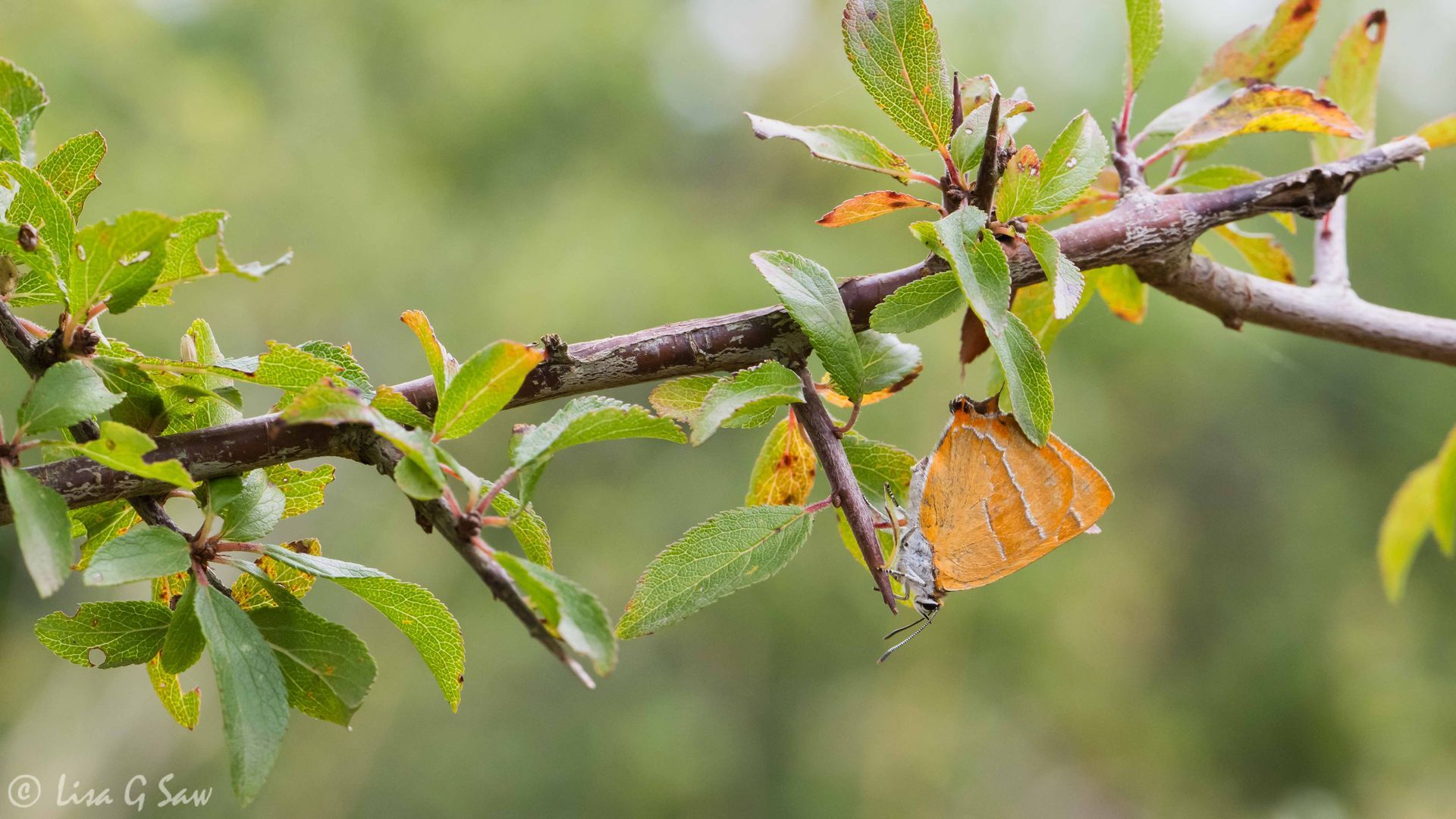

Bee Orchid
By Lisa G Saw July 15, 2026
WILDLIFE HIGHLIGHTS We were up in Yorkshire at the start of the month enjoying a week's holiday at Bempton Cliffs. Gannets and Puffins were on the cards for us up there, and lots more besides. You'll be able to read more about our trip in due course. 
Spotted Sandpiper
By Lisa G Saw July 4, 2026
WILDLIFE HIGHLIGHTS May ended up being a quiet month for me in terms of wildlife sightings, because Bob managed to put his back out sadly, which curtailed our outings together. In fact, we had been due to go to Kent on the 1st May as an early Birthday trip for him, but we had to cancel that. To be honest, it was actually nice for me having a bit of downtime with Bob, though obviously I wasn't happy about the reason! Although Bob's back is taking a while to fully recover, he's gradually getting there and doing much better now. Whilst there are only a few wildlife highlights to share with you for May, I've got to say, they were fabulous! I didn't have to travel far, as most were seen in our back garden in Seaford. It's amazing how much you can enjoy when you pay close attention to what's in your garden. Literally, within a few days of Bob putting his back out, we heard that two Spotted Sandpipers ( Actitis macularius ) had been seen along the River Ouse north of Piddinghoe, not far from Seaford. It's an exceptionally rare vagrant that you'd normally expect to see in North America, or in Central and South America where it overwinters. It would certainly draw a lot of keen birders to the area, and for that reason I didn't even consider going to look for it myself over the bank holiday weekend, as I'm not really a birder per se. But, by the Monday, I was tempted and Bob encouraged me to go, despite the likelihood it could be busy. It was very disappointing for him, as there was no way he could manage it, which was such a shame. So, having checked the latest sightings that day, I set off in the afternoon for Southease. I really hoped I would see them, but more than that, I prayed I'd have a really great close view of it on my own, which I knew was highly unlikely. As I walked along the east side of the bank south towards their last known location, I saw a man approaching from the other direction. We briefly stopped to chat. He was clearly a birder and shared the good news that he'd seen it, which was very encouraging for me. I continued on further, and then another two men approached. Once again, we stopped to chat. When I set off again, I noticed that there was no one else on my side of the bank. What luck! However, on the other side of the bank there were two small clusters of people, a little distance apart. The sun was behind them, so their side would have been better for photos, which no doubt was why they had gone to the west side. I just hoped the bit of cloud cover we had, would be to my advantage, making it easier to photograph from the east. The first group were pointing their bins or large camera lenses towards my side of the bank, so I knew where to look for the Spotted Sandpiper. I slowed down as I approached and it didn't take long for me to have my first glimpse of this attractive wader species through my bins. It's so striking. Just look at those lovely spots on its chest.
By Lisa G Saw May 21, 2026
WILDLIFE HIGHLIGHTS April was an amazing month for wildlife moments for myself and Bob, so much so, it's been a struggle to narrow it down to just the encounters I've shared below...and there's still quite a few! The month was off to a great start with a new species for me - the Black-necked Grebe. One was seen for a number of days at West Rise Marsh, on the outskirts of Eastbourne. Bob had already been to see it during the week, but was happy to go again with me when I was free. Despite the very windy conditions, we had some lovely views of this stunning bird.
Show More